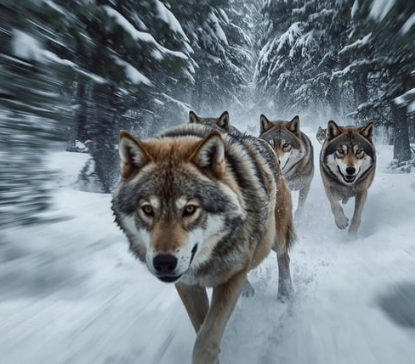
Adamaland Story
Far north, beyond the last villages, there was a land people avoided. Not because it was cursed. Because it was cold.
Winter stayed longer there. Snow came early. The ground froze hard enough to split stone.
The land was called Adamaland. No one remembered why. A man lived there alone.He had come years earlier, carrying only tools, seeds, and a strange conviction that animals could survive where humans struggled. He built a low wooden house, reinforced it against wind, and began raising wolves.
Not hunting them. Raising them. People said he was mad. Wolves were dangerous. Unpredictable. They turned on you.
He raised many wolves, but not all the same. Some were fierce. Loud. Restless. They paced constantly. Snapped at each other. Demanded food early and often. Others were quieter. They watched. They waited.They moved only when necessary.
Feeding time revealed everything. The loud wolves pushed forward. They growled. They took more than their share.
The quiet ones stayed back. At first, the man fed everyone equally. But winter grew harsher. Food became scarce. And the man made a choice — not consciously at first. He fed the wolves that came to him.
The ones that demanded. The ones that frightened him. The ones that seemed strongest.
They grew larger. Their howls filled the night. The quiet wolves survived on less. They didn’t complain. They didn’t attack. They endured.
Years passed. The loud wolves ruled the land around the house. They chased away others. They tore at fences. They kept the man awake at night. The quiet wolves withdrew into the forest.
One winter, colder than all the others, the man fell ill.
He could no longer haul meat the way he used to. He moved slower. He listened more.
From his window, he noticed something strange. The loud wolves were strong — but erratic.
They fought each other. They wasted energy. They panicked when food didn’t come fast enough.
The quiet wolves, thin but steady, worked together. They waited. They shared. They endured the cold. That winter, the loud wolves began to starve.
Not because the man stopped feeding them. But because they could not survive without constant feeding. The quiet wolves did.
One morning, the man understood.
Adamaland was not harsh.It was honest.
It s owed the consequence of what is fed — and what is neglected.
As spring came, the man wrote a single sentence in a notebook:
The wolves I feared were not stronger.
They were just fed more often.
Years later, travelers would find the house empty. Only the wolves remained.
Some loud. Some quiet. And the land still waited, patient and cold, teaching the same lesson to anyone willing to see it.
Some people hear this as a tale about wolves.
Others recognize something closer. Inside each of us, there are wolves. Not outside. Inside. Some were loud. They knew how to shout. They knew how to scare the others into silence.
- They said things like:
- “Stay small.”
- “Wait.”
- “Don’t try.”
- “Follow the path that already exists.”
And because they were loud, they were fed. Every time someone chose safety over desire, they were fed. Every time someone waited for permission, they were fed.
The ones driven by fear, urgency, control, and doubt are loud. They demand attention. They grow when fed.
The quieter ones — courage, trust, creativity, patience — do not shout. They wait.
Nothing inside you is destroyed. Some parts are simply underfed.
The question Adamaland leaves you with is not: Which wolf is bad? But:
Which wolves are you feeding?
And which have been waiting, quietly, in the cold?